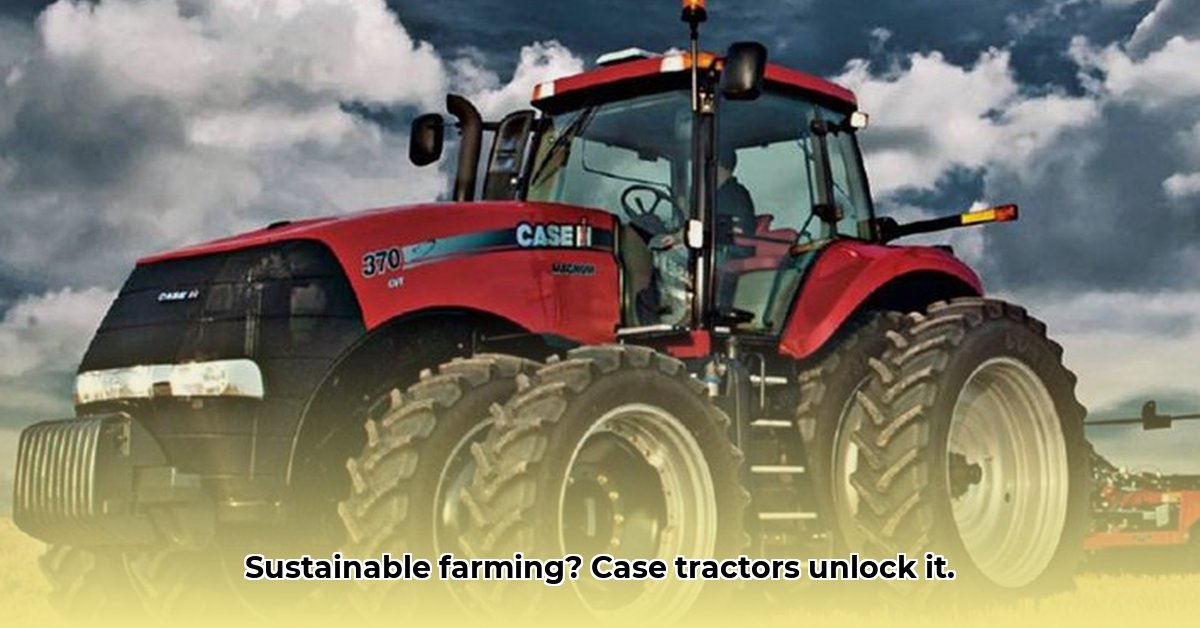
Pictures of Case Tractors: A Legacy of Innovation in Sustainable Agriculture
Images of Case tractors working the land aren't just snapshots; they depict a revolution in farming. These machines symbolize a shift towards smarter, more sustainable practices, driven by cutting-edge technology. This article explores how Case tractors and their advanced features are helping farmers cultivate a better future, both economically and environmentally. For more on Case's history, check out this page on vintage Case tractors.
Case Tractors and Precision Farming: Optimizing Resource Use
High-resolution images of Case tractors often showcase their sophisticated technological capabilities. These aren't your grandfather's tractors. GPS-guided auto-steering systems, for instance, reduce operator fatigue and ensure precise, consistent field coverage—eliminating overlaps and missed patches. This precision translates directly into resource efficiency.
Furthermore, precision planting and spraying capabilities, facilitated by sensors monitoring soil conditions (moisture, nutrients), allow for variable rate technology (VRT). VRT ensures that seeds, fertilizers, and pesticides are applied only where and when needed. It is like tailoring each plant's needs, maximizing efficiency and minimizing waste. This level of control is a game-changer.
Sustainability Aspects: Environmental and Economic Benefits
The integration of these high-tech features results in substantial environmental and economic advantages. Reduced fertilizer and pesticide use significantly lessens environmental impact; less chemical runoff means healthier waterways and a minimized carbon footprint. Optimized routes and reduced idling, driven by the precision of the technology, lead to lower fuel consumption, reducing greenhouse gas emissions and operating costs. Farmers also report significant yield improvements – producing more with less input.
Data from independent studies suggest that precision farming techniques implemented on Case tractors can decrease fuel consumption by 10-15%, reduce fertilizer use by 15-20%, and boost yields by 5-10%. These aren't just numbers; they represent a pathway towards a healthier planet and more profitable farming practices. Isn't this a compelling reason to consider modernizing your farming practices?
Real-World Case Studies: Farmers' Success Stories
The impact of Case tractors and precision agriculture isn't theoretical. Farmers across the globe are already experiencing positive results. For example, a farmer in Iowa reported significant fuel cost reductions thanks to the auto-guidance system in his Case tractor. A Kansas farmer attributes his increased yields and reduced herbicide use to precision planting. These are not isolated incidents; farmers worldwide are embracing this technology and sharing impressive success stories.
Future Trends: The Next Generation of Sustainable Farming
The trajectory of agricultural technology is upward and forward. Electric tractors are emerging, promising zero-tailpipe emissions, and autonomous farming, driven by AI and smart sensors, is becoming increasingly viable. AI-powered crop management is likewise improving, offering real-time analysis and response to dynamic field conditions. Case is at the vanguard of these innovations, actively contributing to the development and wider accessibility of these sustainable technologies. The future of farming looks brighter – and greener – than ever before. Doesn't the promise of even more efficient and sustainable farming practices excite you?
Key Benefits at a Glance:
- Increased Efficiency: Reduced fuel consumption, optimized input use, and improved field coverage contribute to significant cost savings and operational improvements.
- Enhanced Sustainability: Lower chemical runoff, reduced greenhouse gas emissions, and minimized environmental impact all contribute to environmentally-friendly farming.
- Improved Yields: Data shows that precision farming techniques lead to higher yields, resulting in increased profitability for farmers.
Case tractors represent a significant step towards a more sustainable future in agriculture. They are not just machines; they're tools for building a more resilient and environmentally responsible agricultural system. The future of food production rests on embracing such technological advancements.